Pakistan Tourist Visa 2026: Fees, Rules and How to Apply
Pakistan suspended its free visa on arrival in January 2026. Here is what the tourist e-visa now costs, what documents you need, and how long it really takes.

Short answer: almost every foreign visitor needs a visa before flying to Pakistan. On 1 January 2026 Pakistan suspended the free Visa Prior to Arrival that had covered 126 nationalities, so you now apply and pay for a tourist e-visa online at visa.nadra.gov.pk before you travel.
Budget roughly US$20 to US$60 depending on your passport, and allow 7 to 10 working days for processing. Only eight nationalities enter visa-free.
If you searched for this a year ago, you would have found something very different. Between August 2024 and the end of 2025, Pakistan ran one of the most generous tourist visa schemes in Asia: free, multiple entry, valid for 90 days, and usually approved within 48 hours. Then it quietly stopped.
Most of the guides still ranking for "Pakistan visa" describe that old system. They are wrong, and following them will cost you a flight. Here is what actually applies now, what you will pay, and where the process still catches people out.
What changed on 1 January 2026
The Visa Prior to Arrival, usually shortened to VPA, launched in August 2024 as the centrepiece of Pakistan's push to grow tourism. Citizens of 126 countries could apply online, pay nothing, and receive a multiple-entry visa good for up to 90 days, typically within 24 to 48 hours.
On 1 January 2026 it was suspended. There was no press release. Travellers worked it out when the VPA option simply vanished from the government's visa portal, and the change was confirmed afterwards by immigration and visa-policy trackers.
Every one of those 126 nationalities now applies for the standard paid e-visa through the Pakistan Online Visa System. The visa still exists and is still straightforward. It is no longer free, and it is no longer fast.
How to spot an out-of-date guide: if a page tells you a Pakistan tourist visa is free, arrives in 24 to 48 hours, or is issued on arrival for 126 countries, it was written before January 2026 and has not been updated. Check the fee on the official portal before you believe any figure, including ours.
Do you need a visa for Pakistan?
Almost certainly yes. Travellers fall into three groups.
Nationalities that enter visa-free
Eight nationalities need no visa at all. Nationals of Bahrain, Kuwait, Oman, Qatar, Saudi Arabia and the United Arab Emirates receive 90 days, an exemption that took effect on 14 August 2024. Maldivian nationals also get 90 days and Nepali nationals get 30. Maldives and Nepal have never required a visa for Pakistan.
Nationalities that use the e-visa
Everyone else applies online. The Pakistan Online Visa System is open to nationals of roughly 175 to 190 countries, including the United States, the United Kingdom, Canada, Australia, Japan, South Korea and the whole of the EU. This covers the overwhelming majority of people who come to us for a trek or a tour.
Nationalities that cannot use the e-visa
The online system is closed to holders of Indian, Israeli and Taiwanese passports, who must go through a consulate or, in the Indian case, a separate process described below. Armenian nationals were excluded historically; Pakistan established diplomatic relations with Armenia in 2025 and access has changed since, so Armenian passport holders should check the portal directly rather than trust any secondary source, this one included.
What a Pakistan tourist visa costs
Pakistan sets visa fees on a reciprocal basis, so what you pay depends on what your country charges Pakistani nationals. That is why you will see different numbers quoted on different sites, and why nobody can give you a single figure that is true for everyone.
Published figures for a single-entry tourist visa currently run from about US$20 at the low end to around US$60 for American, British and Canadian passports, with most European nationalities landing in between. A single-entry business visa is quoted at about US$100. We are giving you the range rather than a precise number because the sources genuinely disagree, and the only figure that matters is the one the portal shows you at the payment step.
| Visa type | Typical fee | Validity | Entries |
|---|---|---|---|
| Tourist e-visa | US$20 to US$60, by nationality | 3 months | Single entry |
| Business e-visa | Around US$100 | 3 months | Single entry |
| Visa-free entry (8 nationalities) | Free | 30 or 90 days | n/a |
Some nationalities still pay nothing for a tourist visa. The fee-exempt list covers Afghanistan, China, Japan, Iceland, North Korea, Slovakia, Malaysia, Saudi Arabia and the United Arab Emirates, with work visas excluded from the exemption. Japanese travellers in particular often assume the 2026 change hit them too. It did not.
One thing to plan around: the fee is non-refundable. If your application is refused, the money is gone.
How to apply for the Pakistan e-visa
The whole process happens on one government website, visa.nadra.gov.pk. There is no paper stage, no courier, and no embassy visit for most nationalities.
- Create an account on the Pakistan Online Visa System. Use the official portal. A number of lookalike sites charge a service fee on top of the government fee for filling in the same form.
- Select your visa category. For a holiday, a trek or a mountaineering trip, that is the Tourist category.
- Complete the application form. Enter your name exactly as it appears in the machine-readable strip of your passport, not as you normally write it.
- Upload your documents. The list is below.
- Pay by credit or debit card. American applicants should note the form expects a valid US phone number.
- Wait for processing and watch your email and the portal dashboard.
- Download and print your e-visa. Carry a paper copy. Airline check-in staff and immigration officers both ask for it, and phone batteries fail at the worst moments.
Documents you need
- A passport with at least six months validity beyond your arrival date and two blank pages
- A passport photograph on a white background, taken within the last three months
- A hotel booking or an invitation letter from a host in Pakistan
- A travel itinerary with your dates and destinations
- Three months of bank statements as proof of funds
The invitation letter is where independent travellers lose time. If you are staying with friends or family, the letter needs to be an affidavit on Government of Pakistan stamp paper, signed by your host, with copies of their CNIC and passport attached. If you are travelling with an operator, that requirement disappears: the booking confirmation and invitation letter we issue for our Pakistan tours satisfies the accommodation and itinerary documents in one go, which is the single most common reason our clients' applications go through without a query.
How long the Pakistan e-visa takes
Official guidance is 7 to 10 working days. Some applicants report waits stretching to 20. Against the 24 to 48 hours the old VPA delivered, this is the change that catches people hardest.
Apply at least three to four weeks before you fly. Working days exclude weekends and Pakistani public holidays, and the queue lengthens ahead of the spring blossom season and the summer trekking window. If you are timing a trip around a particular month, our guide to the best time to visit Pakistan is worth reading before you lock in dates.
Avoid booking non-refundable international flights until the visa is in hand. That is standard advice for any visa, and it is worth repeating now that the processing time has grown by a factor of ten.
Is there still a Pakistan visa on arrival?
For practical purposes, no. Visa on arrival for tourists went with the VPA suspension, and this is the single most misreported point on the internet right now.
Narrow exceptions survive. Turkish nationals holding a valid Schengen, UK or US visa can obtain a visa on arrival, and a business visa on arrival remains available to certain approved categories of traveller. Neither applies to an ordinary holiday.
If you arrive in Islamabad without a visa expecting to buy one at the counter, you will be refused entry and put on a return flight. Apply before you fly.
Special cases
Indian nationals
India is the most restricted case by a wide margin. Indian passport holders cannot get a tourist visa for Pakistan at all. The categories open to them are family visit, business, transit and religious pilgrimage, and every application is cleared directly by the Ministry of Interior rather than through the online system.
Holders must register with the police after arrival, may enter and leave only through Wagah, Islamabad, Lahore or Karachi, and are not eligible for extensions. Overstaying carries a penalty of 40 rupees per day.
Israeli passports
Pakistan does not recognise Israel and does not accept Israeli passports. Israeli nationals cannot use the e-visa system.
Dual nationals
Enter and exit Pakistan on the same passport throughout, the one carrying the visa. Switching documents between arrival and departure creates a mismatch in the immigration record that is tedious to unpick at the airport.
The permits your visa does not cover
This is the part visa websites never tell you, and it matters more in Pakistan than in most countries, because the places people come for sit close to sensitive frontiers.
The good news first. The No Objection Certificate that foreigners once needed for Gilgit-Baltistan was dropped years ago for general travel. Hunza, Skardu, Shigar, Deosai National Park and the Karakoram Highway are all open, and your tourist visa alone is enough to visit them. The only paperwork is the routine passport registration at a handful of checkpoints along the Karakoram Highway.
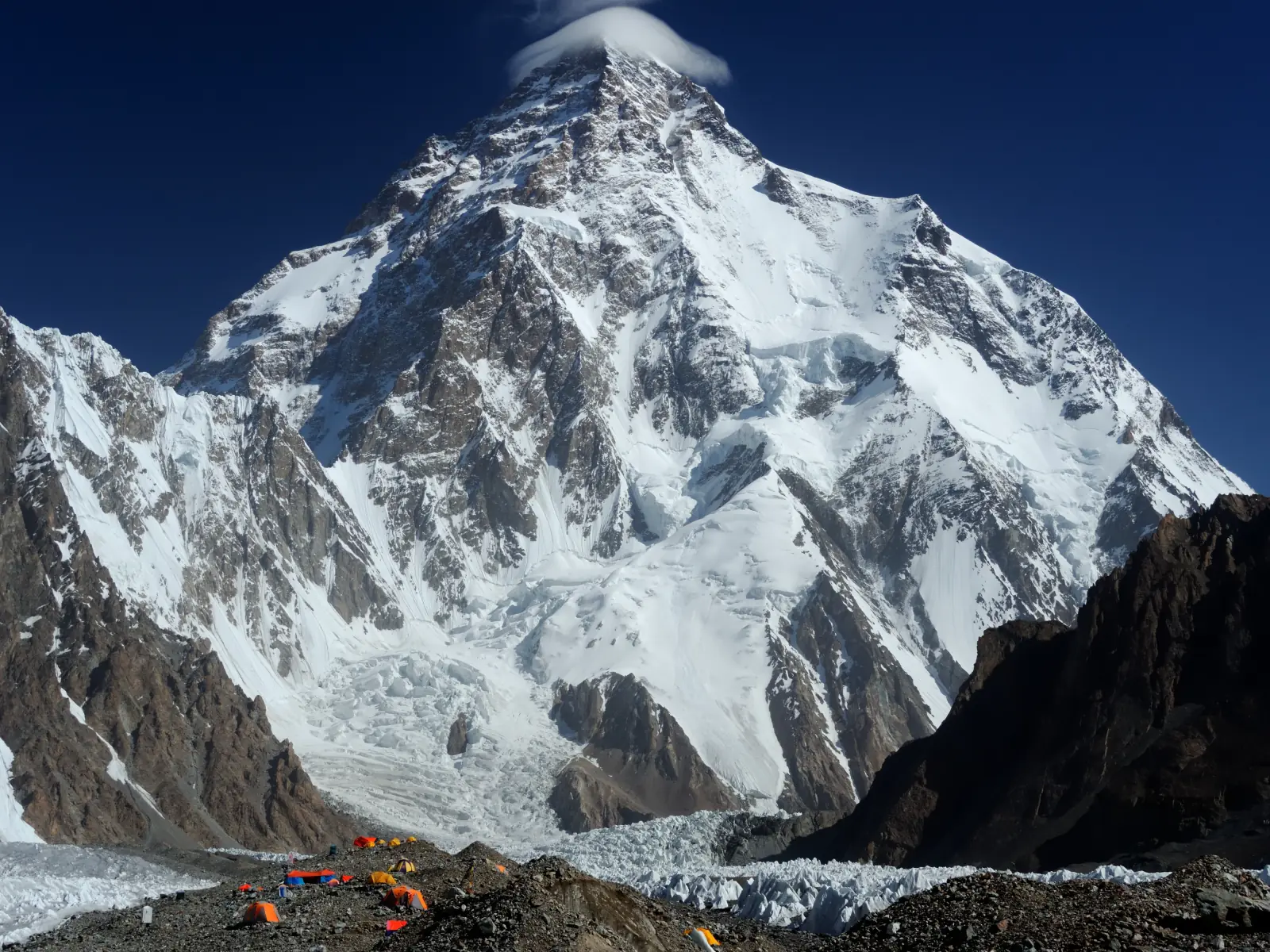
Restricted zones are a different matter. High-altitude routes near the Line of Control, some valleys along the Afghan border, and the Baltoro Glacier system all require an NOC arranged in advance. That includes the approach to K2 Base Camp, Concordia, and the Broad Peak and Gasherbrum base camps. Those treks also need a separate permit from the Alpine Club of Pakistan, and the restricted-area trekking fee runs to US$150 per person per month.
None of that is something you can sort out from a hotel in Skardu the week you arrive. A licensed operator files it for you, weeks ahead, and it is a large part of what you are paying an operator for on a Baltoro trip.
After you land
Keep the printed e-visa with your passport for the whole trip. Hotels record it at check-in, and it is occasionally checked at police posts on the road north.
Extensions are handled online through the Directorate General of Immigration and Passports. Apply before your current visa expires rather than after, and note that Indian nationals are excluded from extensions entirely.
Five mistakes we see every season
- Applying through a copycat website. They charge a markup to submit the same free-to-file government form.
- Name mismatches. The name on the application must match the passport exactly, middle names and all.
- Applying a week before departure. Under the current system that is not enough time.
- Assuming it is still free. The single most expensive assumption on this list.
- Arriving with the visa only on a phone. Print it.
Worth the paperwork
The 2026 change made getting into Pakistan slower and no longer free. It did not make it hard. One online form, one card payment, and a couple of weeks of patience is a low price for the Karakoram, and the country on the other side of the process is still one of the least crowded great mountain destinations on earth.
If safety is the other question on your mind, we wrote a region-by-region look at whether Pakistan is safe to visit, and our complete guide to visiting Pakistan covers the practical side, including money and mobile data. When the visa lands, browse our tours and we will handle the permits, the logistics and the invitation letter for the next one.
Pakistan visa FAQ
Do I need a visa to travel to Pakistan?
Yes, unless you hold a passport from Bahrain, Kuwait, Maldives, Nepal, Oman, Qatar, Saudi Arabia or the United Arab Emirates. Every other nationality needs a visa arranged before travel, in most cases an e-visa applied for online at visa.nadra.gov.pk. The six Gulf states get 90 days visa-free, an exemption that took effect on 14 August 2024. Maldivian nationals also get 90 days and Nepali nationals get 30. The online system is open to roughly 175 to 190 nationalities, including the United States, the United Kingdom, Canada, Australia, Japan, South Korea and the whole of the EU, so most people who come to us for a trek or a tour use it. Indian, Israeli and Taiwanese passport holders cannot use the e-visa and have to go through a consulate or a separate process. The rules changed in January 2026 and many older guides are out of date, so check the official portal before booking flights.
Can US citizens travel to Pakistan?
Yes. American citizens can visit Pakistan on a tourist e-visa, applied for online before departure. There is no ban on US citizens travelling to Pakistan. The whole application is completed on the government portal with no embassy visit and no physical documents. Because Pakistan sets fees reciprocally, US passport holders sit at the higher end of the range, around US$60 for a single-entry tourist visa, though the portal shows the exact figure at the payment step. The form also expects a valid US phone number, which catches some applicants out. Allow 7 to 10 working days for processing and apply three to four weeks before you fly. You will need a passport valid for six months beyond arrival, a recent photo, a hotel booking or invitation letter, an itinerary and three months of bank statements. If you travel with us, the booking confirmation and invitation letter we issue cover the accommodation and itinerary documents.
How much does a Pakistan visa cost?
Between about US$20 and US$60 for a single-entry tourist visa, depending on your nationality, because Pakistan sets fees reciprocally. What you pay mirrors what your own country charges Pakistani nationals, which is why different websites quote different numbers. American, British and Canadian passport holders sit at the higher end, and most European nationalities land somewhere in between. A single-entry business visa is quoted at about US$100. Nationals of Afghanistan, China, Japan, Iceland, North Korea, Slovakia, Malaysia, Saudi Arabia and the UAE pay no fee, although work visas are excluded from that exemption. The portal shows your exact amount before you pay, and that is the only figure worth trusting, ours included. Pay by credit or debit card on the official site rather than a lookalike that adds its own service charge for the same form. The fee is non-refundable, so if your application is refused, the money is gone.
Can I get a Pakistan visa on arrival?
Not as a tourist. Pakistan suspended its visa on arrival and Visa Prior to Arrival schemes on 1 January 2026, and this is the most misreported point about Pakistan travel right now. Turkish nationals holding a valid Schengen, UK or US visa remain eligible, and a business visa on arrival exists for certain approved categories, but ordinary holidaymakers must apply and pay online before flying. Neither exception covers a holiday or a trek. If you land in Islamabad without a visa expecting to buy one at the counter, you will be refused entry and put on a return flight. Any guide promising a free visa on arrival for 126 countries, or approval within 24 to 48 hours, was written before the change and has not been updated. Apply through visa.nadra.gov.pk at least three to four weeks ahead, then print the approved e-visa and carry the paper copy with your passport.
How long does the Pakistan e-visa take to process?
Official guidance is 7 to 10 working days, with some applicants reporting up to 20. Apply three to four weeks before you fly, and avoid non-refundable flight bookings until the visa is approved. Working days exclude weekends and Pakistani public holidays, so a two-week wait on the calendar is normal. Queues also lengthen ahead of the spring blossom season and the summer trekking window, which is when most of our clients travel. This is the change that catches people hardest. The old Visa Prior to Arrival was usually approved within 24 to 48 hours, and that scheme ended on 1 January 2026, so applying a week before departure is no longer enough. Watch your email and the portal dashboard while you wait, then download and print the e-visa once it arrives. Errors slow things down, so enter your name exactly as it appears in the machine-readable strip of your passport.
How long can I stay in Pakistan on a tourist visa?
The standard tourist e-visa is valid for three months and issued for single entry. That is ample for any of our treks and tours, including the longer Karakoram treks to K2 Base Camp and over the high passes. Single entry means one arrival on that visa, so plan any side trip out of the country with that in mind. Extensions are possible through the Directorate General of Immigration and Passports, applied for online before your current visa expires. Apply before the expiry date rather than after it. Indian nationals are not eligible for extensions at all. Keep the printed e-visa with your passport for the whole trip, because hotels record it at check-in and police posts on the road north occasionally ask to see it. The eight nationalities that enter visa-free get 90 days, or 30 days in the case of Nepal, without needing an e-visa at all.
Is the Pakistan visa still free?
No, not for most nationalities. The free Visa Prior to Arrival that covered 126 countries from August 2024 was suspended on 1 January 2026. Those travellers now pay the standard e-visa fee. A small list of nationalities, including China, Japan and Malaysia, remains fee-exempt. The full exempt list is Afghanistan, China, Japan, Iceland, North Korea, Slovakia, Malaysia, Saudi Arabia and the UAE, and work visas are excluded. Japanese travellers often assume the 2026 change hit them too. It did not. There was no press release when the old scheme ended; the option simply disappeared from the government portal. For everyone else the tourist e-visa now costs roughly US$20 to US$60, depending on nationality, and takes 7 to 10 working days rather than the 24 to 48 hours the free scheme delivered. Assuming it is still free is the most expensive mistake we see each season.
Do I need a permit for Hunza, Skardu or K2 Base Camp?
Hunza, Skardu, Shigar, Deosai National Park and the Karakoram Highway need no permit beyond your visa. The No Objection Certificate foreigners once needed for Gilgit-Baltistan was dropped years ago for general travel, and the only paperwork is routine passport registration at a few checkpoints along the highway. Restricted areas do: the Baltoro Glacier routes to K2 Base Camp, Concordia, Broad Peak and the Gasherbrums require a No Objection Certificate, an Alpine Club of Pakistan trekking permit, and a restricted-area fee of US$150 per person per month. The same applies to high-altitude routes near the Line of Control and some valleys along the Afghan border. A licensed operator arranges these in advance. You cannot sort them out from a hotel in Skardu the week you arrive, and filing them weeks ahead is a large part of what you pay an operator for on a Baltoro trip. On our tours, we handle the permits for you.
Can Indian citizens get a Pakistan tourist visa?
No. Indian passport holders cannot obtain a tourist visa for Pakistan, and India is the most restricted case by a wide margin. Family visit, business, transit and religious pilgrimage visas are available, cleared directly by the Ministry of Interior rather than through the online e-visa system, which is closed to Indian passports. Holders must register with police on arrival, may only enter through Wagah, Islamabad, Lahore or Karachi, and cannot extend their stay. The same four points apply when leaving, so plan the exit as carefully as the entry. Overstaying carries a penalty of 40 rupees per day. Indian nationals are also excluded from the online extension process that other visitors use through the Directorate General of Immigration and Passports. Anyone holding a second nationality should enter and leave Pakistan on the same passport throughout, the one carrying the visa, because switching documents creates a mismatch in the immigration record.
Ready for Your Next Adventure?
Join our community of explorers and discover the journey of a lifetime. Our expert team is ready to help you plan your perfect expedition.