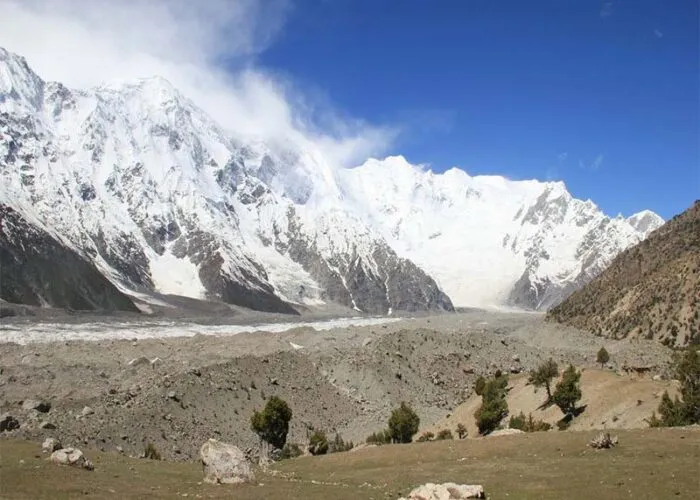
パスー・カテドラル(Passu Cathedral)
Hunzaの象徴的な大聖堂の尖塔
標高
6,106m
難易度
Challenging
日数
20–28 Days
ベストシーズン
Jun–Aug
Passu Cathedral(Tupopdan):フンザの尖塔群 完全ガイド
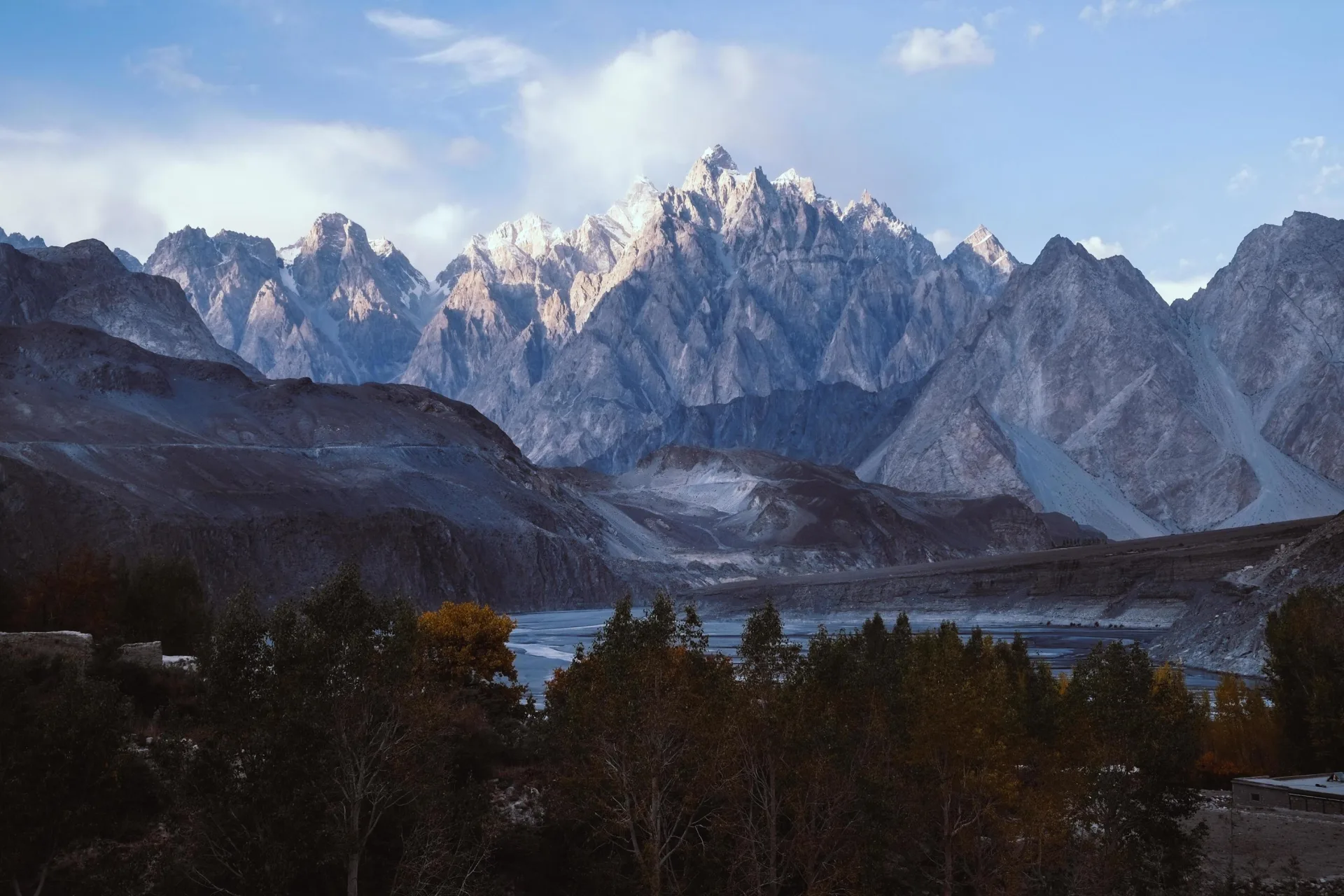
Passu Cathedral は、カラコルムハイウェイを行くほぼすべての旅行者が足を止めて写真に収める、黒く鋭い尖塔の連なりです。upper Hunza の Passu 村の上に標高6,106メートルでそびえ、その麓に暮らす人々はこれを Tupopdan と呼びます。この峰は二つの顔を持っています。年に数万人もの旅行者が目にするパキスタンで最も見分けやすい山の一つであると同時に、ギザギザの頂はわずかな登頂記録しか持たない、本格的でめったに登られない高山の目標でもあります。本ガイドではその両面、すなわち尖塔を最も美しく眺める方法と、この山への挑戦が実際に何を伴うのかを取り上げます。
Passu Cathedral はどこにある?
この峰は、Gilgit-Baltistan のフンザ渓谷上部にあたる Gojal に位置し、Passu 村の北約10キロ、フンザの中心地 Karimabad からカラコルムハイウェイを車で約3〜4時間の場所にあります。Batura Muztagh の東縁に連なる支脈、South Ghujerab Mountains に属し、すぐ近くに Passu 氷河と Batura 氷河が流れ下っています。座標はおよそ 36°33′N 74°56′E。これほど絵になるのはその圧倒的な高低差ゆえで、北壁はわずか1.5キロほどの距離で約1,700メートルを駆け上がり、頂は Hunza 川の上およそ3,600メートルにあるため、尖塔は道路脇からそのまま空を埋め尽くします。
Tupopdan、Passu Cones、Passu Cathedral:一つの山、三つの名前
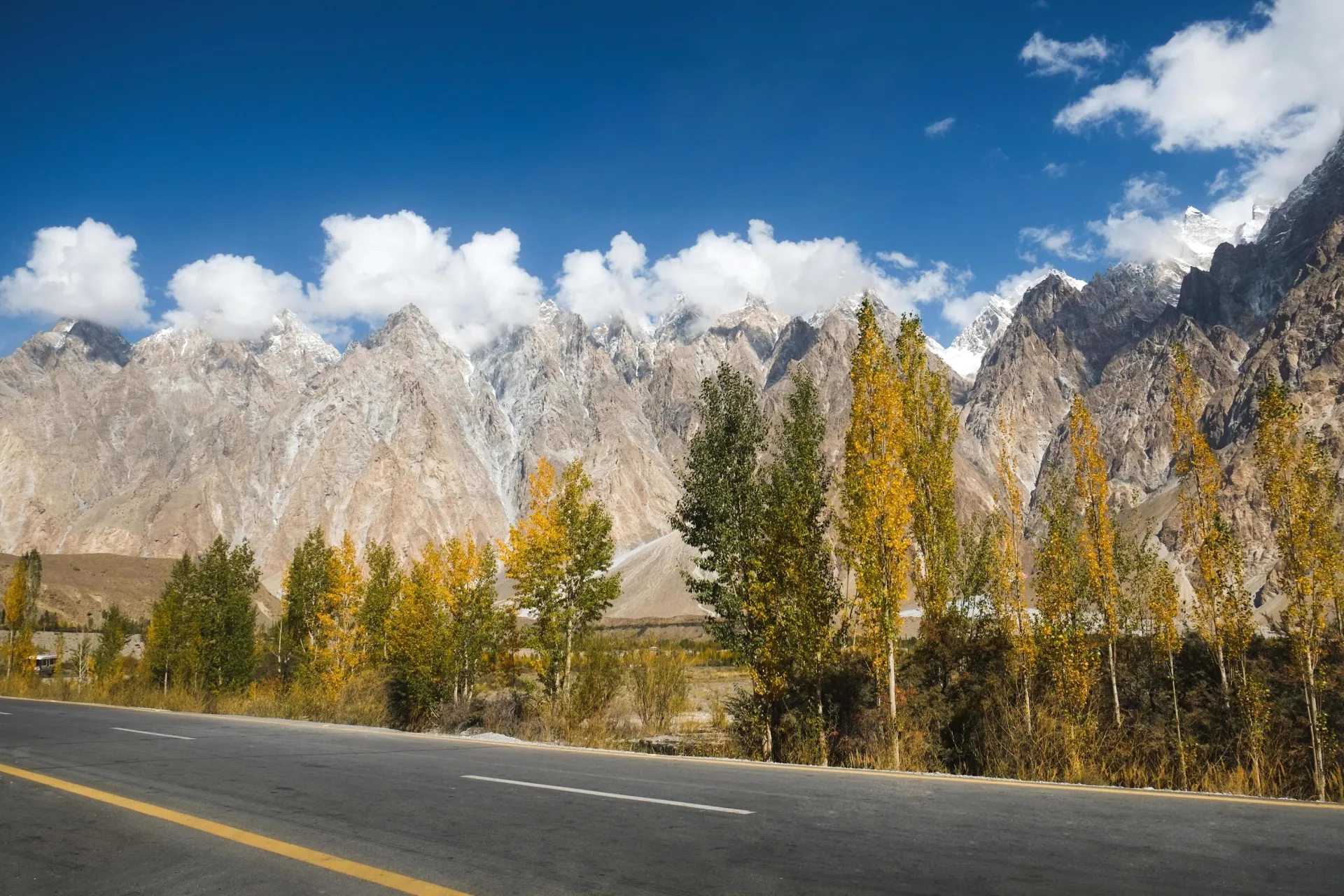
現地のワヒ語での名は Tupopdan で、冬の間に南面の雪がいかに速く融けるかにちなみ、通常「日に焼かれた」あるいは「熱い岩」と訳されます。旅行者や写真家は、ほぼ左右対称の点が連なる姿から Passu Cones、あるいはその輪郭がゴシック教会の尖塔と控え壁を思わせることから Passu Cathedral と呼びます。三つの名はすべて同じ6,106メートルの山塊を指します。よくある混同に反して、これは Passu Sar(7,478m)でも Passu Diar(約7,295m)でもありません。それらは少し西にある Batura Muztagh の、別の、より高い峰です。
Passu Cones の眺め方
尖塔を楽しむのに何かを登る必要はなく、ほとんどの訪問者はただ眺めるためにやって来ます。定番の眺めはカラコルムハイウェイそのものからで、Passu のすぐ南にある道路脇の展望地が絵葉書の角度を与えてくれます。少し進むと、Hunza 川にかかる板とケーブルの揺れる吊り橋、Hussaini 吊り橋が尖塔を見事に額装し、それ自体が目的地になっています。最良の光を求めるなら日の出か日没に。低い太陽が黒い岩を金色に染め、点々とした峰の陰影を際立たせます。尖塔は一年を通して見えますが、最も澄んだ空気はたいてい秋に訪れます。
Passu 周辺の楽しみ方
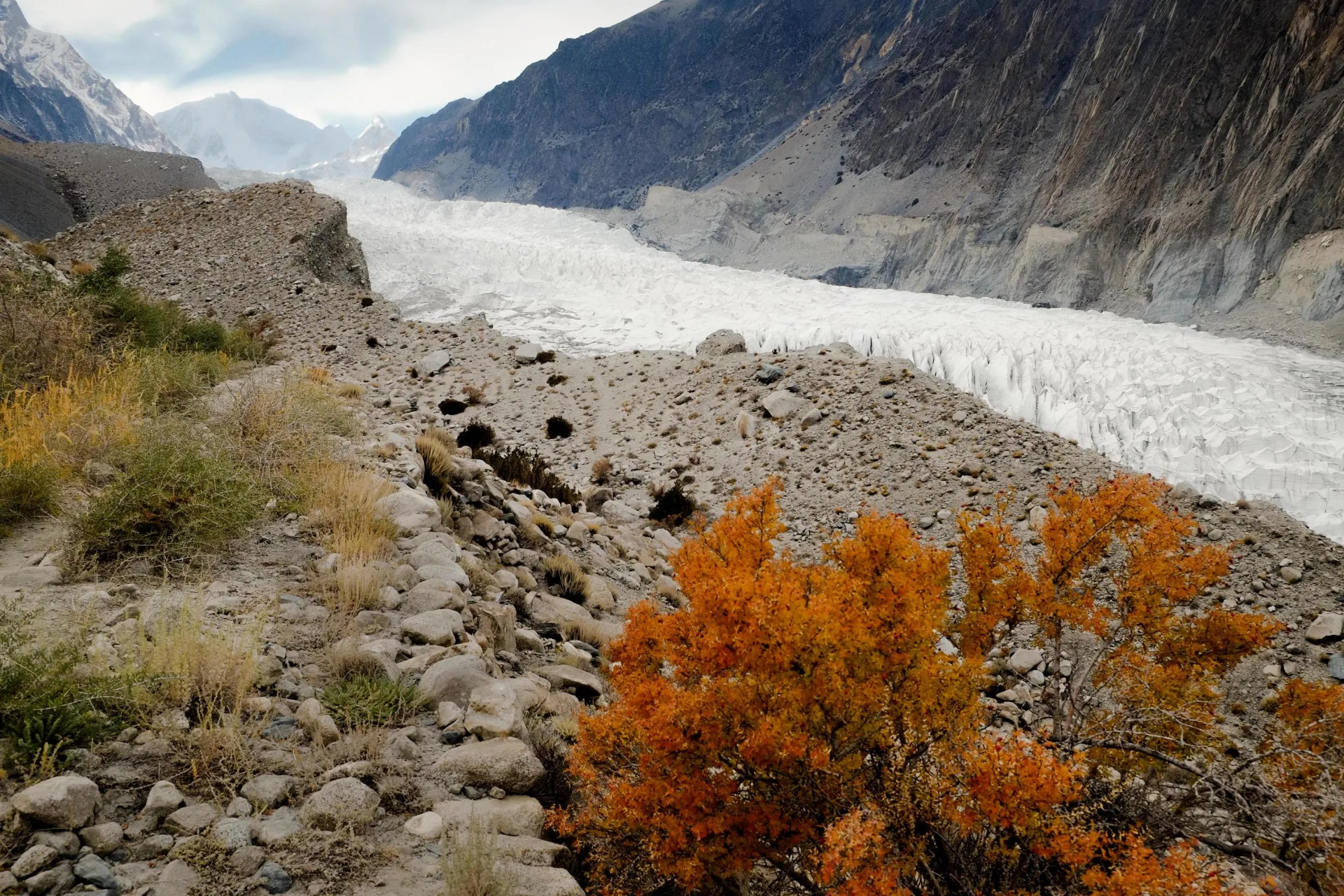
Passu は一日二日の拠点として手頃です。Hussaini 吊り橋と、ハイウェイから約2キロ離れて渡り鳥を集める汽水湖 Borith 湖は、どちらも気軽な小旅行です。体力のある人は Passu 氷河の末端まで歩いたり、Patundas の草原へ登って氷河を見下ろしたりでき、極地以外で最も長い氷河の一つである Batura 氷河の白い舌は、谷を少し上ったところに広がっています。尖塔と合わせて、upper Hunza はカラコルムハイウェイ全体でも最も風光明媚な区間の一つです。
登るのはどれほど難しく、どれほど危険か
登攀としての Passu Cathedral は、6,106メートルという控えめな標高が思わせるよりはるかに難しい山です。尖塔は急峻な岩と氷のミックスで露出も大きく、どの面にも頂への容易なラインはありません。初めての遠征やトレッキングピークの延長で挑む山ではありません。確かな技術登攀、不安定で後戻りのきかない地形での的確な判断、そして状況が悪化したときに引き返す経験が求められます。落石、不安定な雪、変わりやすい天候が主な危険です。Tupopdan に足を踏み入れる人より写真に撮る人の方がはるかに多く、その均衡が変わることはまずないでしょう。
初登頂とそれに続いた者たち
Tupopdan は1987年7月6日、イギリス人の Andy Cave と John Stevenson によって北東稜から初登頂されました。一部の登山資料は同じ年に別のイギリス隊の登頂を伝えており、この峰の記録がいかに乏しいかを物語っています。以後の登頂はまれです。この山は商業的目標としての賑わいを持つことはなく、登山家の間では踏み固められたルートよりも、その姿と難しさで今なお知られています。Passu 群のより広い物語を知りたいなら、upper Hunza のほかの6000m峰が同じカラコルムの一角にあります。
北東稜ルート
1987年の初登頂の北東稜は、今なおこの峰に最も結びつくラインです。尖塔群を貫く最も理にかなった弱点を提供する、岩と氷の持続的なミックス登攀で、急がず慎重に確保しながら進みます。挑む隊がごくわずかなため、大きな商業峰のような維持された camp の連なりも、毎年の固定ロープ整備もありません。挑戦は自己完結した高山的試みであり、決まった行程ではなく、その隊とその日の状況に合わせて計画されます。だからこそ私たちはここでの登攀を一件ごとに見積もり、計画します。
訪れる・登るのに最適な時期
観光なら、Passu への道はほぼ一年を通して開いていますが、快適な時期はおおむね5月から10月です。9月と10月の秋は最も澄んだ眺めと、谷を彩る名高い黄金のポプラをもたらします。登山なら、夏が最も安定した時期で、おおよそ6月から8月、ミックス地形での日中の条件が最も整います。とはいえ高峰のカラコルムはどの月でも悪天をはらむことがあります。
Passu への行き方
Passu はカラコルムハイウェイ沿いにあり、それこそが尖塔がこれほど近づきやすい理由です。ほとんどの旅行者は Gilgit から約5〜6時間、あるいはフンザ中心部の Karimabad から3〜4時間、しばしば Attabad 湖や Gulmit に立ち寄りながら陸路で到着します。最寄りの空港は Gilgit で、Islamabad からの便は山の天候に大きく左右されます。多くの人は景色だけのためにも、ハイウェイを上る二日がかりの陸路を好みます。
登攀に必要なもの:許可と費用
Passu Cathedral を登るにはパキスタンの登山許可と Gilgit-Baltistan に支払う入峰料が必要で、隊には連絡将校が付きます。6,000メートル峰のため入峰料は8000m峰に比べて控えめですが、これほど思い切った登攀のためのロジスティクス、技術スタッフ、装備はそうではありません。費用は隊の規模、日数、サポートの水準によって大きく変わるため、このページに示した数字は目安であり、私たちは遠征ごとに個別に見積もります。
Go With Guide Pakistan は Passu Cathedral の両面、すなわち尖塔と upper Hunza 一帯への写真・観光の旅と、経験ある登山者のための山そのものへのオーダーメイドの技術遠征の双方を手配します。どちらをお望みかお知らせいただければ、それに合わせて旅を組み立てます。
登山の歴史
1980s
初期の試み
初期の試み
大聖堂のような尖塔に惹かれ、初期の登山隊はTupopdanの急峻な岩と氷を偵察し、その劇的な岩壁に可能なルートを探りました。
1987
初登頂
初登頂
1987年7月6日、イギリスの登山家Andy CaveとJohn Stevensonが北東稜からTupopdan(Passu Cathedral)に初登頂しました。
2000s
稀な登頂
稀な登頂
技術的な難しさから、Tupopdanは憧れの的でありながら登られることの少ない目標であり続け、経験豊富な登山家によって稀に再登されるのみでした。
2010s
観光の象徴
観光の象徴
カラコルムハイウェイとPassuの吊り橋が訪問者を集めると、Passu Conesはパキスタンで最も多く撮影されるランドマークの一つになりました。
おすすめの書籍
High Asia: An Illustrated History of the 7,000 Metre Peaks
by Jill Neate (1989)
High Asia: An Illustrated History of the 7,000 Metre Peaks
by Jill Neate (1989)
The Karakoram: Mountains of Pakistan
by Shiro Shirahata (1990)
The Karakoram: Mountains of Pakistan
by Shiro Shirahata (1990)
Passu Cathedral に関するよくある質問
Passu Cones の標高は?
Passu Cones の標高は?
主峰は6,106メートル(20,033フィート)に達します。同じ峰は Tupopdan または Passu Cathedral とも呼ばれ、upper Hunza の Passu 村の北約10キロにそびえています。
Tupopdan とはどういう意味?
Tupopdan とはどういう意味?
Tupopdan は現地のワヒ語の名で、冬の間に山の南面の雪がいかに速く融けるかにちなみ、通常「日に焼かれた」あるいは「熱い岩」と訳されます。
なぜ Passu Cathedral と呼ばれるの?
なぜ Passu Cathedral と呼ばれるの?
急峻で尖った尖塔の連なりがゴシック大聖堂の塔や控え壁を思わせることから、この名が付きました。同じ形が、もう一つの一般的な名 Passu Cones の由来でもあります。
Passu Cones はどこにあり、どう眺める?
Passu Cones はどこにあり、どう眺める?
upper Hunza の Gojal に、カラコルムハイウェイのすぐ上にそびえています。最良の眺めは Passu のすぐ南にある道路脇の展望地と、Hussaini 吊り橋からで、とくに日の出と日没が見事です。
Passu Cones は登れる?
Passu Cones は登れる?
登れますが、まれです。この峰は岩と氷の急峻で技術的なミックス登攀で、初登頂は1987年、初心者やトレッキング向けの山ではありません。ほとんどの人はロープではなく道路から尖塔を体験します。
Passu を訪れるのに最適な時期は?
Passu を訪れるのに最適な時期は?
旅行ならおおむね5月から10月で、秋が最も澄んだ空気と谷の黄金色をもたらします。登山なら最も安定した時期は夏、おおよそ6月から8月です。
Passu へはどう行く?
Passu へはどう行く?
Passu はカラコルムハイウェイ沿いにあり、Gilgit から約5〜6時間、またはフンザ中心部の Karimabad から3〜4時間の陸路で行けます。最寄りの空港は Gilgit で、Islamabad からの便は天候次第です。
Passu Cathedral は Passu Sar と同じ?
Passu Cathedral は Passu Sar と同じ?
いいえ。Passu Cathedral は Passu Cones または Tupopdan とも呼ばれ、標高6,106メートルです。Passu Sar(7,478m)と Passu Diar(約7,295m)は Batura Muztagh の別の、より高い峰で、しばしば混同されます。
含まれるもの
含まれないもの
次の冒険の準備はできましたか?
探検家コミュニティに参加し、一生に一度の旅を発見しましょう。専門チームがあなたの完璧な遠征を計画するお手伝いをいたします。